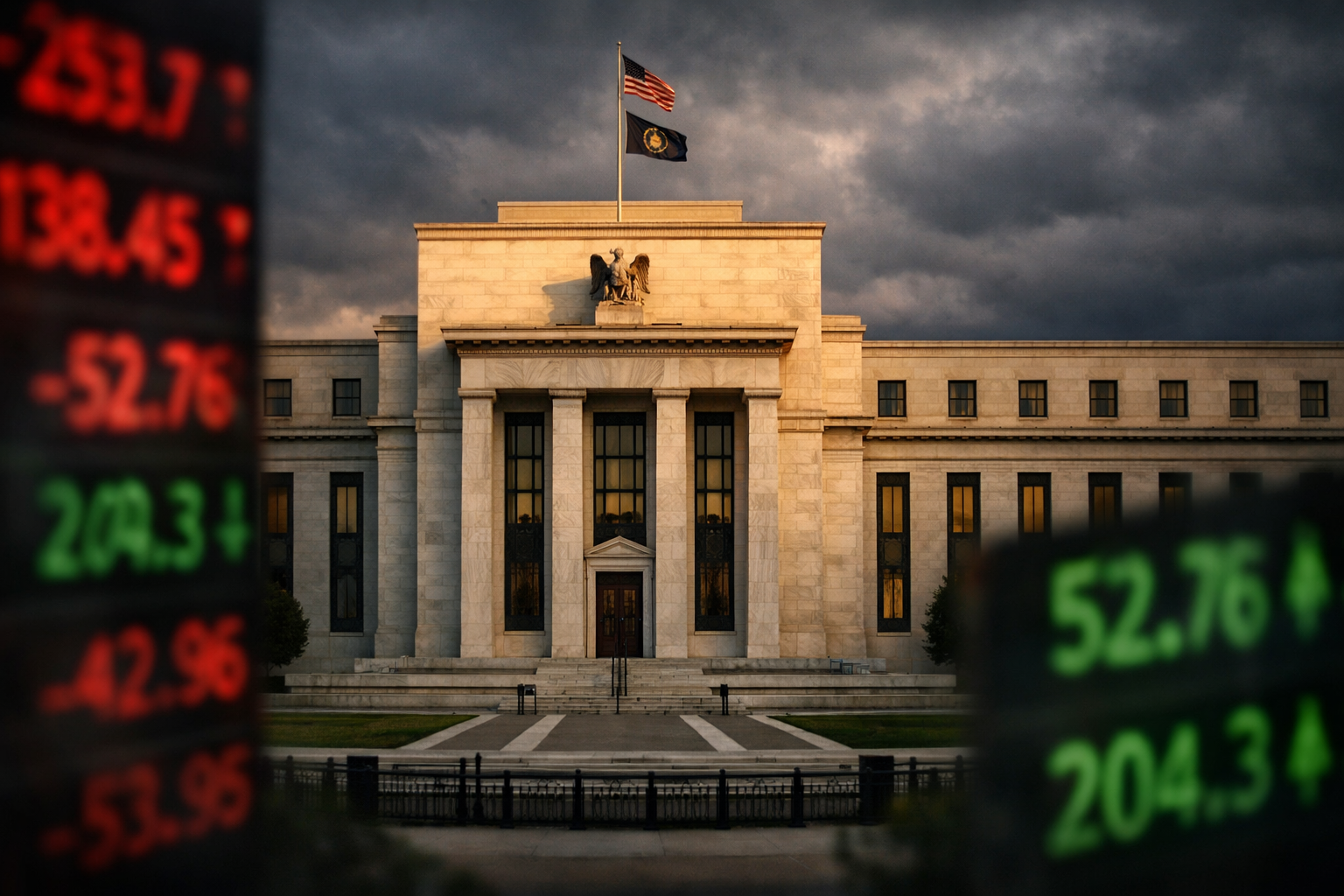
Global Markets on Edge as OPEC Adjusts Oil Output Targets

Oil markets rarely move in isolation. A single announcement from the Organization of the Petroleum Exporting Countries (OPEC) can reverberate across currency markets, equity indices, bond yields, and even political discourse. This week, global markets reacted sharply after OPEC confirmed adjustments to its oil output targets-decisions that immediately reshaped expectations around supply, inflation, and global growth.
The oil market sits at the intersection of geopolitics and macroeconomics. Production decisions by major exporters influence not only energy prices but also inflation trajectories, monetary policy decisions, corporate profitability, and consumer behavior. As OPEC recalibrates its output strategy amid slowing global demand growth and persistent geopolitical tensions, investors are reassessing risk across asset classes.
This article examines the mechanics behind OPEC’s decision, how markets have responded, and what the adjustments could mean for energy producers, importing economies, and financial markets in the months ahead.
Understanding OPEC’s Role in Global Energy Markets
Founded in 1960, OPEC coordinates petroleum production policies among major oil-exporting nations. Its primary objective is to stabilize oil markets, secure steady income for producers, and ensure reliable supply for consumers.
Over time, OPEC expanded its influence through the OPEC+ framework, which includes non-member producers such as Russia. Together, OPEC+ accounts for roughly 40% of global oil production and an even larger share of proven reserves. That concentration of supply gives the group substantial leverage over prices.
How Output Targets Work
OPEC sets production quotas for member countries. When the group cuts output targets:
- Global supply tightens.
- Oil prices tend to rise (all else equal).
- Producer revenues increase per barrel.
- Importing nations face higher energy costs.
Conversely, raising production targets can increase supply and exert downward pressure on prices.
The latest adjustment signals OPEC’s willingness to intervene proactively in response to shifting demand forecasts and price volatility.
What Prompted the Latest Adjustment?
Several interlocking factors shaped OPEC’s decision:
1. Slowing Global Demand Growth
Demand growth has moderated compared with the post-pandemic rebound period. China’s economic recovery has been uneven, industrial activity in parts of Europe remains subdued, and higher interest rates in advanced economies are weighing on consumption.
2. Inflation and Monetary Policy
Central banks, including the Federal Reserve and the European Central Bank, have maintained restrictive monetary policies to combat inflation. Higher borrowing costs dampen economic activity and reduce energy demand growth expectations.
3. Price Volatility
Oil prices have experienced wide swings due to geopolitical tensions, shipping disruptions, and speculation. OPEC’s adjustment appears designed to anchor prices within a range that supports member-state fiscal budgets without triggering demand destruction.
4. Internal Fiscal Pressures
Many OPEC members rely heavily on oil revenues to fund public spending. Sustained lower prices strain national budgets, increasing pressure to manage supply in ways that stabilize or lift benchmark prices.
Immediate Market Reaction

Financial markets responded within hours of the announcement.
Oil Prices
Benchmark crude prices rose sharply following the decision. Traders interpreted the move as a signal that OPEC remains committed to defending price floors. Futures contracts priced in tighter supply for the coming quarters.
Equity Markets
Energy stocks rallied globally. Shares of major integrated oil companies and exploration firms outperformed broader indices, reflecting expectations of improved margins.
However, sectors sensitive to input costs-such as airlines, logistics firms, and heavy manufacturing-faced selling pressure due to anticipated higher fuel expenses.
Currency Movements
Oil-exporting nations saw their currencies strengthen modestly. By contrast, currencies of net-importing economies faced depreciation pressure amid concerns about widening trade deficits.
Bond Yields
Government bond yields edged higher in several major economies as investors recalibrated inflation expectations. Energy costs are a key input in headline inflation measures, and higher oil prices can complicate central bank policy paths.
Broader Economic Implications
Inflation Dynamics
Energy prices feed directly into consumer price indices through fuel and indirectly through transportation and production costs. A sustained increase in oil prices could:
- Slow disinflation progress in advanced economies.
- Delay potential interest rate cuts.
- Increase volatility in inflation-linked bond markets.
However, the inflationary impact depends on duration. Short-term price spikes often have limited long-run effects unless reinforced by wage growth or supply constraints elsewhere.
Growth Outlook
Higher oil prices function as a tax on importing economies. Households spend more on fuel, reducing discretionary consumption. Businesses face higher operating costs, potentially dampening investment.
Emerging markets are particularly vulnerable, especially those with:
- High energy import dependence.
- Weak currencies.
- Limited fiscal space.
On the other hand, oil-exporting economies may benefit from improved fiscal balances and increased public spending.
Geopolitical Context
OPEC decisions rarely occur in a vacuum. The geopolitical environment remains complex.
Tensions in the Middle East, ongoing sanctions regimes, and evolving alliances within OPEC+ all influence output strategies. Coordination between OPEC members and non-OPEC producers such as Russia remains critical for enforcing compliance.
Market participants also monitor compliance rates closely. Announced cuts do not always translate into full reductions in physical supply. Historically, adherence has varied across member states depending on domestic priorities.
Sector-by-Sector Impact Analysis
Energy Sector
Producers typically benefit from tighter supply conditions. Upstream companies gain from higher realized prices, while integrated majors may experience improved cash flow and dividend sustainability.
However, sustained price increases can also accelerate policy shifts toward renewable energy investments in importing countries.
Transportation and Aviation
Fuel represents a substantial share of operating costs for airlines and shipping companies. A persistent increase in oil prices compresses margins unless offset by ticket or freight rate hikes.
Manufacturing and Chemicals
Petrochemical producers face higher feedstock costs. Industries with thin margins may struggle to pass on higher input prices.
Consumer Goods
Indirect cost pressures may affect pricing strategies across consumer goods sectors, particularly in energy-intensive production chains.
Key Takeaways
- OPEC’s output adjustment signals continued active market management.
- Oil prices rose immediately, reflecting expectations of tighter supply.
- Inflation risks may reemerge if higher prices persist.
- Energy exporters stand to benefit fiscally.
- Import-dependent economies face renewed cost pressures.
- Market volatility is likely to remain elevated in the short term.
Scenarios for the Months Ahead
Scenario 1: Stable Price Range
If global demand remains moderate and OPEC compliance holds, oil prices could stabilize within a defined trading band. Inflationary impacts would be manageable, and central banks could continue gradual policy normalization.
Scenario 2: Supply Shock Amplification
If geopolitical disruptions coincide with production discipline, prices could spike sharply. This would heighten inflation risks and potentially delay monetary easing.
Scenario 3: Demand Weakness Overrides Cuts
If global economic growth slows more than expected, demand weakness could offset supply reductions, limiting upward price momentum.
Market Strategy Considerations
Investors are recalibrating portfolio exposures in light of OPEC’s move. Strategic considerations include:
- Monitoring energy sector earnings revisions.
- Assessing inflation expectations through breakeven rates.
- Evaluating currency exposure in oil-sensitive economies.
- Stress-testing portfolios under higher commodity price scenarios.
Diversification remains central in managing commodity-driven volatility.
Historical Perspective
OPEC has historically intervened during periods of price weakness. Past coordinated cuts have often succeeded in stabilizing markets, though outcomes vary based on demand conditions and non-OPEC supply growth, particularly from U.S. shale producers.
The responsiveness of U.S. shale production introduces a counterbalancing dynamic. When prices rise significantly, shale output often increases, moderating further gains.
Environmental and Energy Transition Considerations
Energy transition policies intersect increasingly with oil market dynamics. Higher oil prices can:
- Incentivize renewable energy investment.
- Accelerate electric vehicle adoption.
- Strengthen political support for energy independence strategies.
However, fossil fuels remain central to global energy consumption, particularly in developing economies where affordability concerns dominate.
Conclusion
OPEC’s latest adjustment to oil output targets underscores the organization’s enduring influence over global markets. The immediate reaction across commodities, equities, currencies, and bonds highlights oil’s central role in the global economic system.
While higher prices may support producer revenues and fiscal stability among exporting nations, they also introduce renewed uncertainty for inflation trajectories and growth prospects in importing economies.
The path forward depends on several variables: compliance among OPEC+ members, global demand resilience, geopolitical stability, and the response of non-OPEC producers. In the near term, volatility is likely to persist as markets digest evolving supply-demand fundamentals.
What remains clear is that oil continues to shape macroeconomic outcomes far beyond the energy sector itself. As OPEC recalibrates production, global markets will remain highly attentive-aware that each adjustment carries consequences well beyond the oil fields.