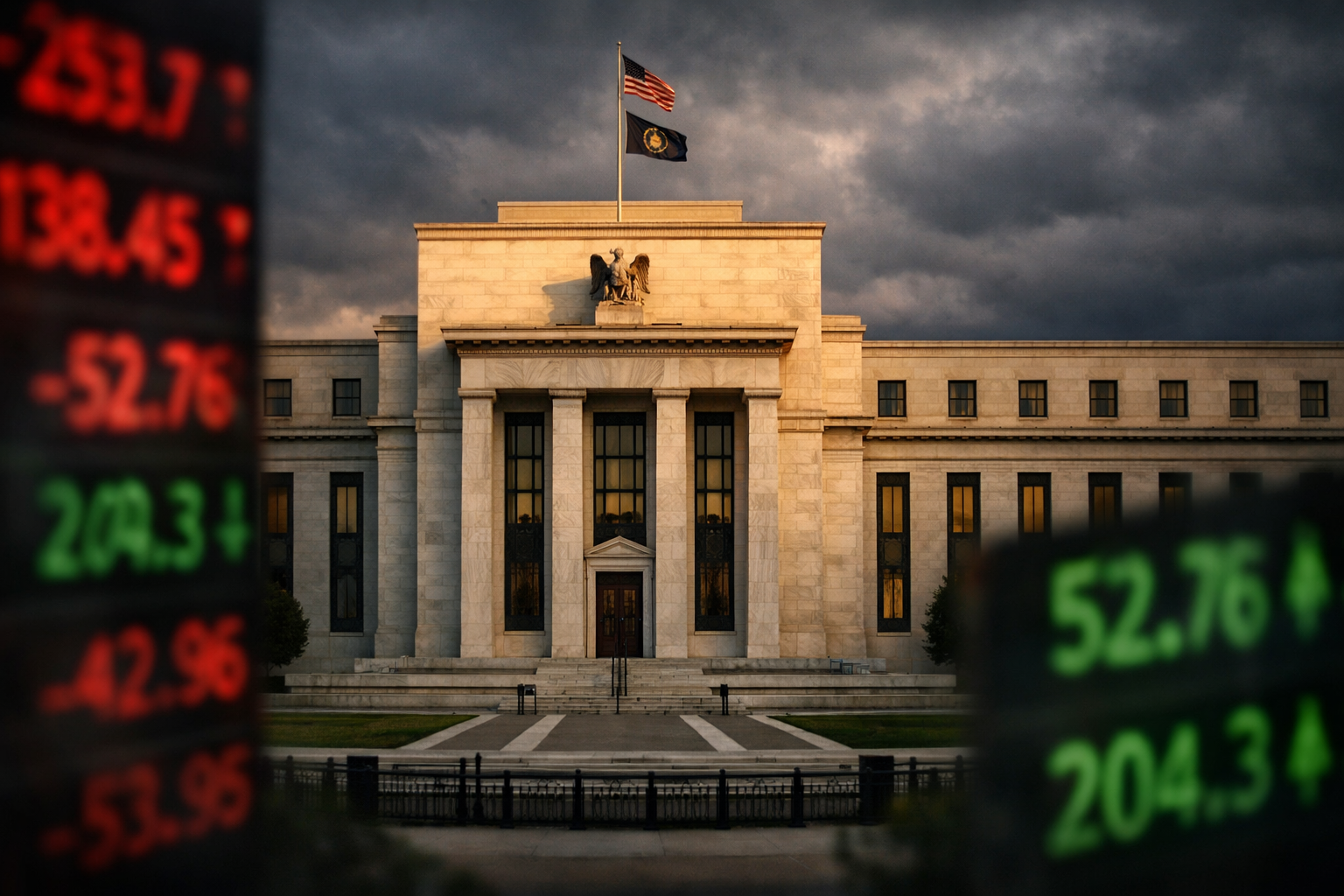
Global Markets on Edge as U.S. and Europe Tighten AI Rules

Artificial intelligence has moved from research labs into boardrooms, trading floors, hospitals, factories, and living rooms at a pace few policymakers anticipated. As generative AI systems reshape productivity expectations and capital flows, regulators in Washington and Brussels are racing to set guardrails. Financial markets are responding in real time.
Over the past two years, U.S. executive actions and agency-level guidance-paired with the sweeping regulatory architecture of the European Union’s AI Act-have introduced a new phase in the global AI cycle: governance risk. Investors are now pricing not only technological potential, but also compliance costs, liability exposure, supply-chain constraints, and geopolitical fragmentation.
This article examines how global markets are reacting to new AI regulations in the United States and Europe, what sectors are most exposed, and how capital allocation is shifting in response.
The Regulatory Backdrop: Washington and Brussels Set the Tone
The United States: Executive Orders and Agency Oversight
In October 2023, President Joe Biden signed a sweeping executive order on artificial intelligence. The order directs federal agencies to establish safety standards, watermark AI-generated content, protect privacy, address algorithmic discrimination, and manage national security risks tied to advanced AI models.
While the U.S. does not yet have a comprehensive federal AI statute, agencies such as the Federal Trade Commission (FTC), the Securities and Exchange Commission (SEC), and the National Institute of Standards and Technology (NIST) have been tasked with expanding oversight within their domains. The NIST AI Risk Management Framework, though voluntary, is already influencing enterprise compliance programs.
Key characteristics of the U.S. approach:
- Decentralized, agency-driven oversight
- Emphasis on national security and frontier model safety
- Focus on transparency, reporting requirements, and cybersecurity
- Greater reliance on executive authority than legislation
This creates regulatory uncertainty but also flexibility. Markets are reacting accordingly.
Europe: The AI Act Becomes Law
In contrast, the European Union has moved toward binding legislation. The European Union formally adopted the AI Act in 2024, establishing the world’s first comprehensive AI regulatory framework.
The AI Act introduces a risk-based classification system:
- Unacceptable risk: banned uses (e.g., certain social scoring systems)
- High risk: strict compliance requirements (e.g., AI in critical infrastructure, medical devices, employment)
- Limited risk: transparency obligations
- Minimal risk: largely unregulated
This legislation is widely compared to the EU’s earlier data protection regime under the General Data Protection Regulation (GDPR), which reshaped global privacy practices.
For multinational firms, the AI Act effectively becomes a global standard because of the EU’s market size and enforcement mechanisms.
Immediate Market Reactions: Volatility and Sector Rotation
Technology Stocks: Compliance Risk Meets AI Premium
AI-linked equities-especially large U.S. tech firms-have experienced both rallies and pullbacks following regulatory announcements.
Companies deeply invested in generative AI, including Microsoft, Alphabet Inc., and NVIDIA, have seen valuation adjustments reflecting:
- Increased compliance costs
- Potential liability exposure
- Export control restrictions
- Heightened disclosure obligations
Semiconductor firms face additional scrutiny due to U.S. export controls limiting advanced chip sales to China. This intersects with AI regulation, as advanced GPUs are essential for frontier model training.
While long-term growth expectations remain strong, short-term volatility has increased around regulatory milestones.
European Markets: Mixed Signals
European tech firms have faced different pressures. Companies operating in regulated sectors-such as healthcare AI or industrial automation-must now navigate the AI Act’s “high-risk” requirements.
Investors are distinguishing between:
- Firms with strong compliance infrastructure
- Firms whose margins may compress under regulatory burden
Some analysts argue that clear rules reduce uncertainty, potentially benefiting incumbents that can absorb compliance costs more easily than startups.
Capital Allocation Shifts: From “Move Fast” to “Governance-Ready”
The regulatory turn is changing venture capital and private equity dynamics.
Venture Capital: Due Diligence Expands
Early-stage AI startups now face deeper scrutiny on:
- Data provenance
- Model documentation
- Bias testing
- Cybersecurity controls
- EU AI Act classification exposure
Term sheets increasingly include regulatory contingency clauses. Legal diligence has expanded from intellectual property to compliance architecture.
Private Equity: Operational Overhaul
Private equity firms investing in AI-enabled companies are budgeting for:
- Regulatory audits
- Model validation teams
- Internal governance boards
- Insurance coverage against AI-related liability
The cost of scaling AI is no longer just compute and talent-it now includes regulatory overhead.
Banking and Financial Services: AI Under Supervision
Financial institutions are among the heaviest AI adopters, using models for credit scoring, fraud detection, and algorithmic trading.
In the United States, the SEC and Federal Reserve have signaled closer oversight of AI-driven financial systems. In Europe, financial AI applications may qualify as “high risk” under the AI Act.
Market implications include:
- Slower deployment timelines
- Higher model validation costs
- Increased audit requirements
- Demand for explainable AI tools
Banks are responding by strengthening internal AI governance frameworks rather than retreating from AI adoption. The result is increased operational expenditure but reduced systemic risk perception.
Supply Chains and Geopolitics: Fragmentation Risk
AI regulation is intertwined with national security and trade policy.
U.S. export controls on advanced semiconductors-particularly those affecting shipments to China-have reshaped global chip supply chains. Firms reliant on AI accelerators must now diversify manufacturing and sourcing.
Investors are monitoring:
- U.S.-China technology tensions
- EU strategic autonomy policies
- Cross-border data transfer restrictions
Regulatory divergence between Washington and Brussels could force multinational firms to maintain dual compliance systems, increasing cost structures.
Corporate Strategy: Governance as Competitive Advantage
Some large firms are positioning regulatory compliance as a strategic moat.
Standard-Setting and Industry Influence
Companies actively participating in standards bodies and public consultations may shape regulatory interpretation.
Firms with robust governance capabilities can:
- Enter regulated markets faster
- Reduce enforcement risk
- Reassure enterprise clients
In effect, regulatory sophistication becomes part of enterprise value.
Market Segmentation: Winners and Losers
Potential Winners
- Established tech firms with compliance capacity
- Legal and compliance technology providers
- Cybersecurity companies
- AI audit and risk-assessment firms
Potential Losers
- Under-capitalized AI startups
- Firms reliant on opaque training data
- Companies operating in banned or tightly restricted categories
Market consolidation may accelerate as compliance costs raise barriers to entry.
Investor Sentiment: Risk Repricing, Not Retreat
Despite regulatory tightening, capital has not fled AI. Instead, markets are repricing risk.
Institutional investors are differentiating between:
- AI infrastructure (chips, cloud services)
- Consumer-facing generative AI applications
- Regulated AI in healthcare, finance, and public services
Infrastructure players often retain premium valuations due to structural demand for compute. Application-layer firms face greater exposure to content moderation, misinformation liability, and transparency rules.
The European Effect: Brussels as Global Rule-Maker
Historically, EU regulations-such as GDPR-have had global spillover effects. The AI Act may follow a similar path.
Multinationals frequently standardize compliance globally rather than operate separate EU-only frameworks. This “Brussels effect” could:
- Raise global compliance standards
- Increase operational costs worldwide
- Reduce regulatory arbitrage
U.S. firms with global exposure are already modeling AI Act compliance as a baseline requirement.
Macroeconomic Implications
AI has been framed as a driver of productivity growth. Stricter regulation introduces friction but may also enhance trust and adoption stability.
Economists note that:
- Predictable regulation can reduce long-term systemic risk
- Clear rules may encourage enterprise adoption
- Excessive compliance burdens could slow innovation
Markets are attempting to quantify which effect dominates.
Key Takeaways for Investors and Corporate Leaders
- Regulatory risk is now a core variable in AI valuation models.
- The U.S. and EU approaches differ structurally but share safety objectives.
- Compliance capability may become a competitive advantage.
- Market volatility around AI-related policy announcements is likely to persist.
- Long-term AI investment trends remain intact, though more selective.
What Comes Next?
Several factors will shape market trajectory:
- Enforcement intensity in both jurisdictions
- Alignment or divergence between U.S. and EU frameworks
- Expansion of AI legislation to other regions (e.g., Asia-Pacific)
- Judicial challenges and interpretation of regulatory scope
If enforcement proves moderate and predictable, markets may stabilize quickly. If penalties are aggressive or politically volatile, risk premiums could widen.
Conclusion: A Maturing AI Market
The era of regulatory vacuum in artificial intelligence is ending. The United States, under President Joe Biden, and the European Union have taken decisive steps to formalize oversight. Financial markets are responding not with panic, but recalibration.
AI remains one of the most significant technological investment themes of the decade. However, its financial narrative has evolved. Governance, compliance, and geopolitical strategy now sit alongside innovation and scale in determining corporate valuation.
In short, global markets are not retreating from AI-they are demanding that it grow up.